From The Desk Of Chris Graebe · 35+ Deals · $1B+ Combined Valuation
The Angel Investor With 35+ Deals & $1B+ In Combined Valuations Is Telling Everyday Americans…
“You Were Too Late For SpaceX”
The same opportunity that made SpaceX early investors wealthy is wide open right now — and most people have no idea.
Dear Fellow Investor,
Here’s a question nobody talking about the SpaceX IPO wants to answer honestly: if SpaceX is already worth $1.75 trillion, who exactly got rich when it went public?
Not you, not me, and not the millions of everyday investors who flooded the market the moment the ticket went live.
The people who built generational wealth on SpaceX built it years ago, quietly, when the company was still private, still unproven, still the kind of bet that made serious investors nervous — when a small group of angel investors wrote checks that most people in their lives thought were insane.
Those investors didn’t get rich because they were smarter than everyone else. They got rich because they were earlier than everyone else, and there is no substitute for that in the history of investing.
By the time a company hits $1.75 trillion and lands on the front page of every financial newspaper in America, the wealth-creation event is essentially over for new investors. The easy upside is already priced in, the risk-reward ratio that made the early angels wealthy has long since collapsed, and what’s left is a crowded trade with a ceiling instead of an open sky.
I’m not saying don’t follow SpaceX now that it’s public — it was one of the most significant financial events in recent memory, and I watched it as closely as anyone.
What I am saying is this: if you’re focused on buying SpaceX, you’re looking at the wrong door.
They didn’t get rich because they were smarter. They got rich because they were earlier.
While the entire investing world is staring at that IPO, something far more important is happening quietly in the background — something the SpaceX story actually proves better than anything I could ever say, and something that is creating the most significant angel investing opportunity I’ve seen in the decade I’ve spent inside this world.
The people who got rich on SpaceX didn’t have a secret network. They didn’t have a Goldman Sachs contact in their phone. They weren’t born into the right family. They had one thing that most people don’t even know is available to them: they got into the deal before the crowd arrived, when the company was still private, still unproven, and still accepting checks from everyday investors who understood what they were looking at.
And because of a law that changed in 2016 — one that permanently removed the velvet rope between everyday Americans and early-stage startup deals — you can do exactly the same thing. Not with SpaceX, but with the companies that are where SpaceX was a decade ago.
That’s the door nobody’s looking at right now, and that’s the one I want to walk you through today.
Something is shifting in the startup world right now, and the smartest founders are leading it.
For decades, venture capital firms called every shot in early-stage investing. They decided which companies got built, which founders got funded, and which everyday Americans got left out of the deals that created generational wealth. But a new generation of founders is starting to ask a different question.
Why take money from a VC firm that wants board control, dictates your timeline, and has no stake in your mission beyond the return — when you could raise from thousands of everyday investors who become customers, advocates, and brand ambassadors the moment they write a check?
The smartest founders have figured out that an army of invested believers sharing their mission is worth more than a single wire transfer from Sand Hill Road. And because of that 2016 law, those founders can now come directly to people like you and me — not as a last resort, but as a deliberate, strategic choice.
That’s the shift. And that’s the door that’s wide open right now.
II
This Has Happened Before — And History Has Never Missed
Here’s the thing history has proven, repeatedly, without a single exception I’ve ever been able to find. The people who understood what was happening — not after it became obvious, but while everyone else was too scared to pay attention — built the kind of wealth that doesn’t just change their lives, it changes the trajectory of their entire family line.
Think about late 2008 and into 2009. While the rest of the world was panicking, a small group of angel investors was quietly writing checks into deals that would define the next decade of American business — at prices and terms that simply don’t exist at any other point in the cycle.
Brian Chesky and Joe Gebbia couldn’t get a single institutional investor to take Airbnb seriously; they pitched seven venture capital firms and got turned down by all seven. So they turned to angel investors instead — investors who understood what they were looking at and were willing to act when the big money wouldn’t. The angels who said yes in that moment watched their investment grow into one of the most valuable companies on earth.
Travis Kalanick was building Uber at the same moment, during the same recession, with the same institutional skepticism surrounding him. The angel investors who got into that earliest round — before the VC machines showed up and locked everyone else out — saw their investment grow by approximately 22,000 times by the time Uber went public.
Instagram’s earliest angels did even better, with documented returns of over 31,200% in under two years. They made those returns not because they were financial geniuses with Ivy League degrees, but because they were in the deal before it became obvious, before the crowd arrived, and before the price reflected what the company was actually building.
And SpaceX, the company everyone raced to buy a piece of at $1.75 trillion? The angels who got into those earliest rounds weren’t waiting for the IPO to feel the impact. Their stakes were already worth hundreds of times what they paid — long before the public ever got a chance to buy in.
Here’s what I want you to understand with complete clarity about what happens when institutional money retreats from early-stage deals: the quality of what becomes available doesn’t go down. It goes up.
The founders getting funded purely on hype — a slide deck, a big vision, the right connections in San Francisco — those deals dry up first. The froth disappears. What you’re left with are the founders building something real, something that solves a genuine problem, that would have found its way to a major VC firm in a healthy market but right now needs a different kind of investor.
And the competition for those deals — from the Sequoias and the Andreessen Horowitzes and the institutional machines that normally crowd everyday investors out — is lower than it has been in over a decade.
I’ve been inside this world for nearly ten years, evaluated hundreds of deals, and put my own money into over 35 companies, and I’ll say this with complete conviction: the legal changes that opened this asset class to everyday Americans, combined with a generation of founders actively choosing people over institutions, has created the most significant angel investing window I have ever personally witnessed.
But this window won’t stay open indefinitely. The institutional money always comes back. The VC firms always return once the picture clears, and when they do, the velvet rope goes back up and everyday investors get pushed back to the sidelines. The investors who look back at this period as the moment that changed everything for their families are not the ones who act after that happens. They’re the ones seeing this right now and deciding they won’t let this window close without being inside it.
III
The Three Phases Every Cycle Repeats
Every generation in American history has been handed a version of the moment we’re living through right now — a moment where the smartest investors stopped chasing the obvious plays everyone else was crowding into and quietly moved into early-stage deals at terms that don’t exist at any other point in the cycle. It’s not random, it’s not luck, and it’s not a theory. It’s a pattern. I call it the Three Phases.
Phase One
The Flood
Institutional money — VC firms, private equity giants, funds managing hundreds of billions — pours into early-stage startups. Valuations inflate. Term sheets get signed faster than founders can read them. The best deals get locked up, and everyday people get pushed to the sidelines and told, politely but firmly, that this world isn’t for them.
Phase Two
The Freeze
The IPO wave peaks, institutional money gets selective, and VC firms — answering to committees and limited partners — start passing on the very deals they’d have fought over twelve months earlier. Not because the founders got worse, but because institutional money is slow and risk-averse by design. And the smartest founders have started to figure that out.
Phase Three
The Opening
The phase almost nobody talks about — and the one that has quietly created more generational wealth than any bull market in startup history. The best founders don’t stop building during the freeze. They adapt, and they look for capital from a source the institutional pullback left wide open: angel investors. Deals that were inaccessible during the flood become available to people who know what they’re looking at.
Let me show you exactly how this has played out, twice, with names you’ll recognize.
The Panic of 1873
The Investor Who Turned A Crisis Into A Dynasty
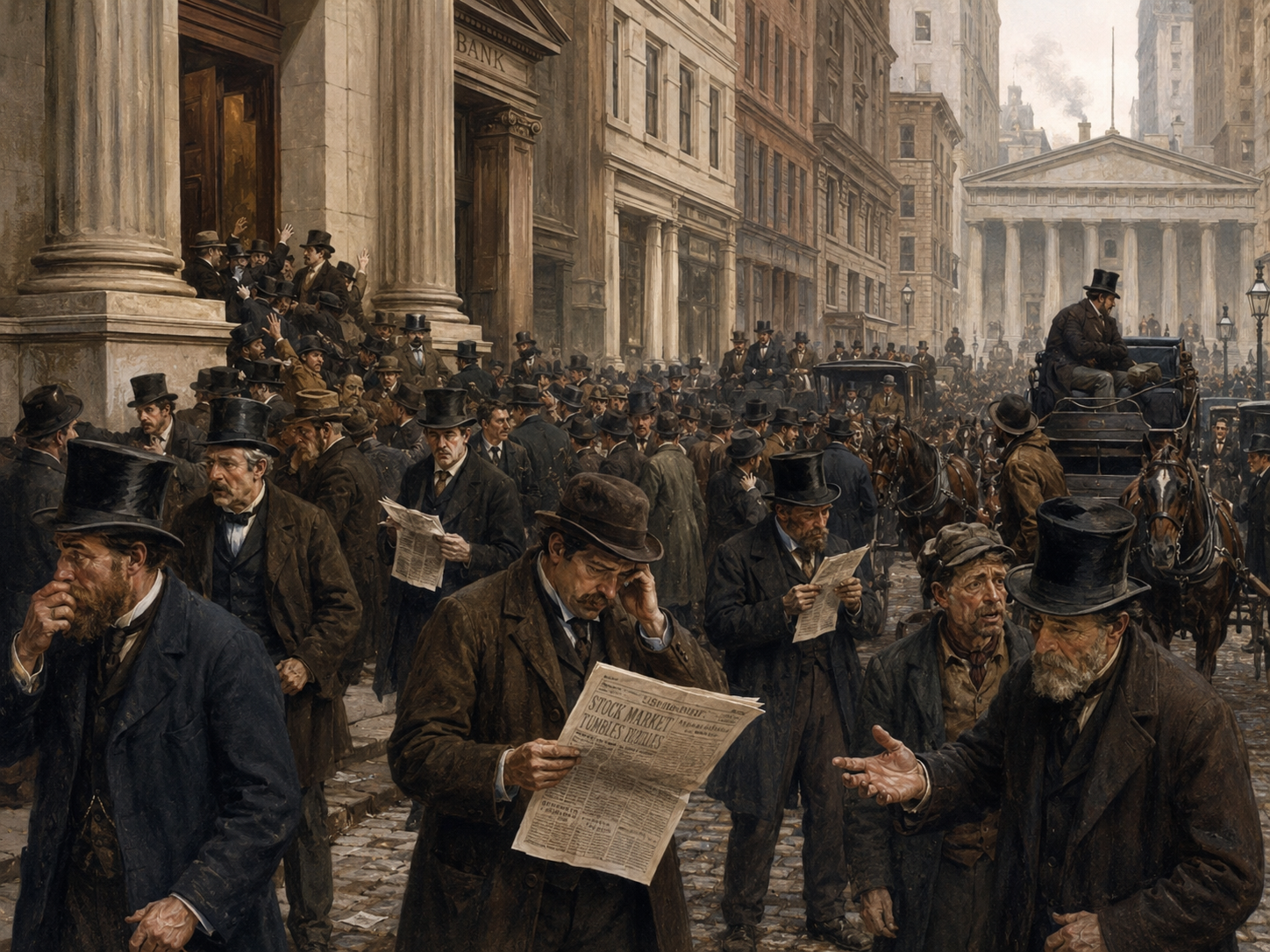
In September of 1873, the largest bank in the United States failed, and what followed was the most severe depression America had seen up to that point — the Long Depression, lasting the better part of a decade. Banks failed across the country, railroads collapsed by the dozens, and the investor class that had been pouring money into industrial expansion did what institutional money always does when the world gets frightening. It disappeared.
But a 34-year-old entrepreneur named John D. Rockefeller saw something in that retreat almost nobody else could. While every other major investor was pulling back from oil refining, Rockefeller leaned in — using the crisis to acquire struggling refineries from desperate sellers at prices that would have been impossible in any other environment, building the infrastructure of what became Standard Oil precisely when his competition was weakest and his capital went furthest.
The investors who backed him in those years didn’t just make good returns — they owned the foundational infrastructure of an entire American industry at crisis prices. By the time the economy recovered and the institutional money flooded back in, what they owned couldn’t be replicated at any price. That’s Phase Three, and that’s what it looks like when you’re inside it.
The Dot-Com Bust of 2001
The Angels Who Funded The Next Decade
Between 2000 and 2002, the Nasdaq lost 78% of its value. VC firms lost billions, and early-stage startup investing went from the hottest thing in finance to something the institutional world wanted nothing to do with — VC investment in early-stage companies dropped by more than 80% between 2000 and 2003. The financial press spent three years writing the obituary of the entire technology startup world.
But a small, quiet group of angel investors kept writing checks. They funded LinkedIn in 2003, when a professional social network sounded to most VCs like exactly the kind of thing that had already failed — which is precisely why the terms they got were extraordinary. The returns those angels eventually saw completely reoriented their families’ financial futures.
And here’s the detail I think about most: the institutional money came back around 2004 and 2005, flooding into the same deals the angels had been funding quietly for three years and pushing valuations back to levels where everyday access no longer existed. The window opened, stayed open for roughly three years, and then closed. The ones who moved built wealth that took years to comprehend. The ones who waited for the headlines to turn positive were too late for the deals that mattered.
That is the pattern, and it has repeated with remarkable consistency across every major cycle in modern history. And right now, the market is sending a signal anyone paying attention should recognize immediately.
IPOs are surging. SpaceX just went public. The headlines are euphoric. Everyone feels like a genius. And if you know your history, you know exactly what that means — the biggest IPO waves have always come right before institutional money gets nervous and the flood becomes the freeze. It happened in 1999. It happened in 2007. The pattern is forming again right now.
Which means Phase Three — the opening — isn’t years away. It’s forming right now, in real time.
The Great Unlock isn’t something I’m predicting is coming. It’s already here. The only question is whether you’re positioned for it before the crowd figures that out, or after.
IV
How I Got Here — And Why It Matters
In 2015, I was building a business on Amazon, and by most measures it was working — real revenue, real capital, the kind of thing people look at and say, okay, he figured it out. But I had capital sitting in conventional investments, stocks and index funds, crawling along at returns that felt completely disconnected from the effort I was putting into the real world.
Then I started paying attention to what my most successful entrepreneur friends were doing with their money, and it stopped me cold. They weren’t buying index funds. They were investing in private companies — early-stage startups — with a level of conviction and excitement I’d never seen anyone bring to a stock ticker.
I started asking questions, and I discovered something that changed the entire direction of my financial life. In 2016, a law changed — part of the JOBS Act — and it did something that had never happened before in the history of American investing: it opened the world of angel investing to everyday Americans who weren’t already millionaires. For the first time, you didn’t need to be an accredited investor with a million-dollar net worth to put money into early-stage startups. The velvet rope had been quietly, legally, permanently removed.
And I remember thinking the same thing you might be thinking right now: if the Bezoses and the Cubans and everyone who built serious multigenerational wealth have always done this, and now I can too — why is nobody talking about it?
So I jumped in. I made real mistakes early, the kind that cost real money. But I kept going, kept learning, kept refining how I thought about deals and founders and markets, and slowly — then all at once — things started to shift.
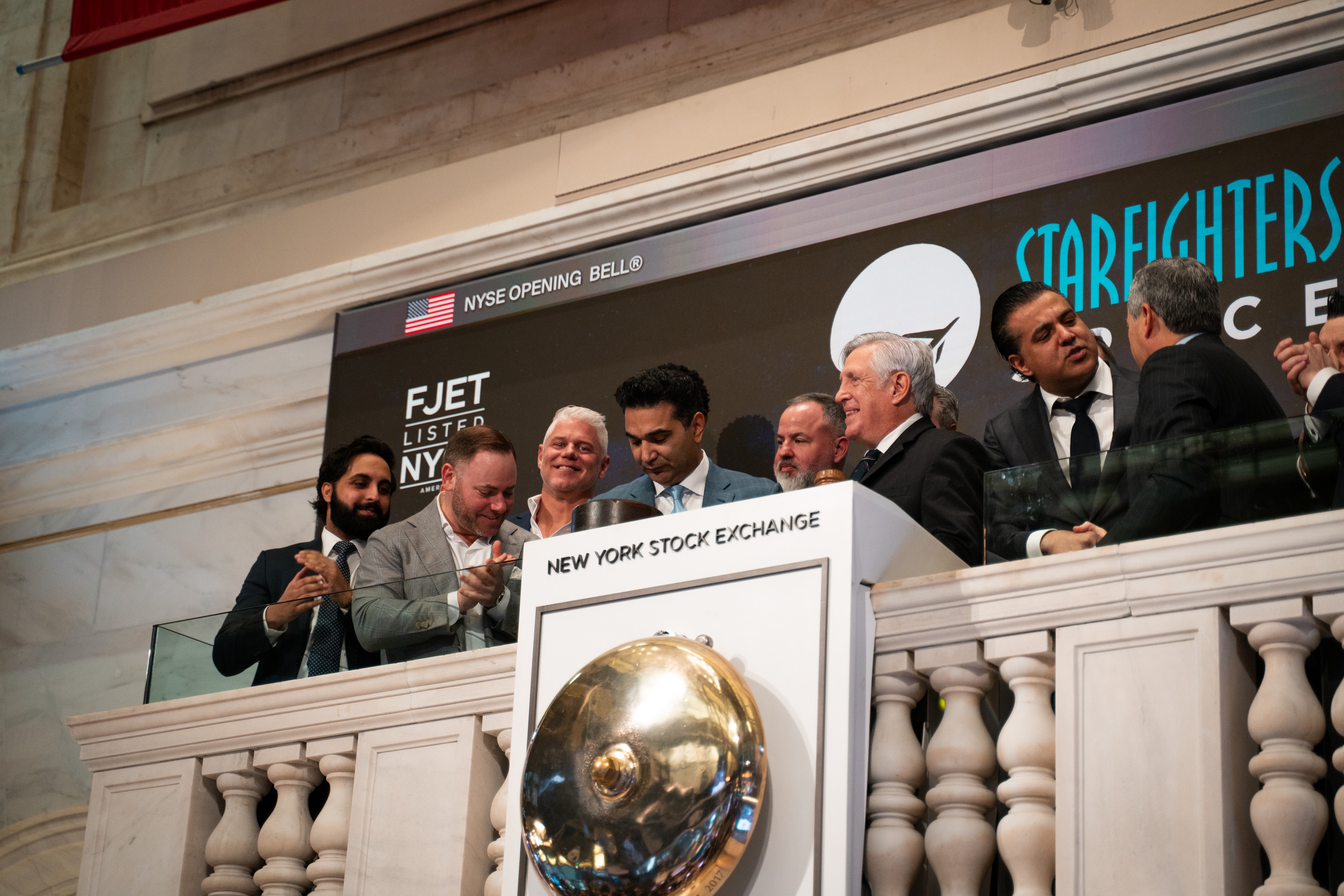
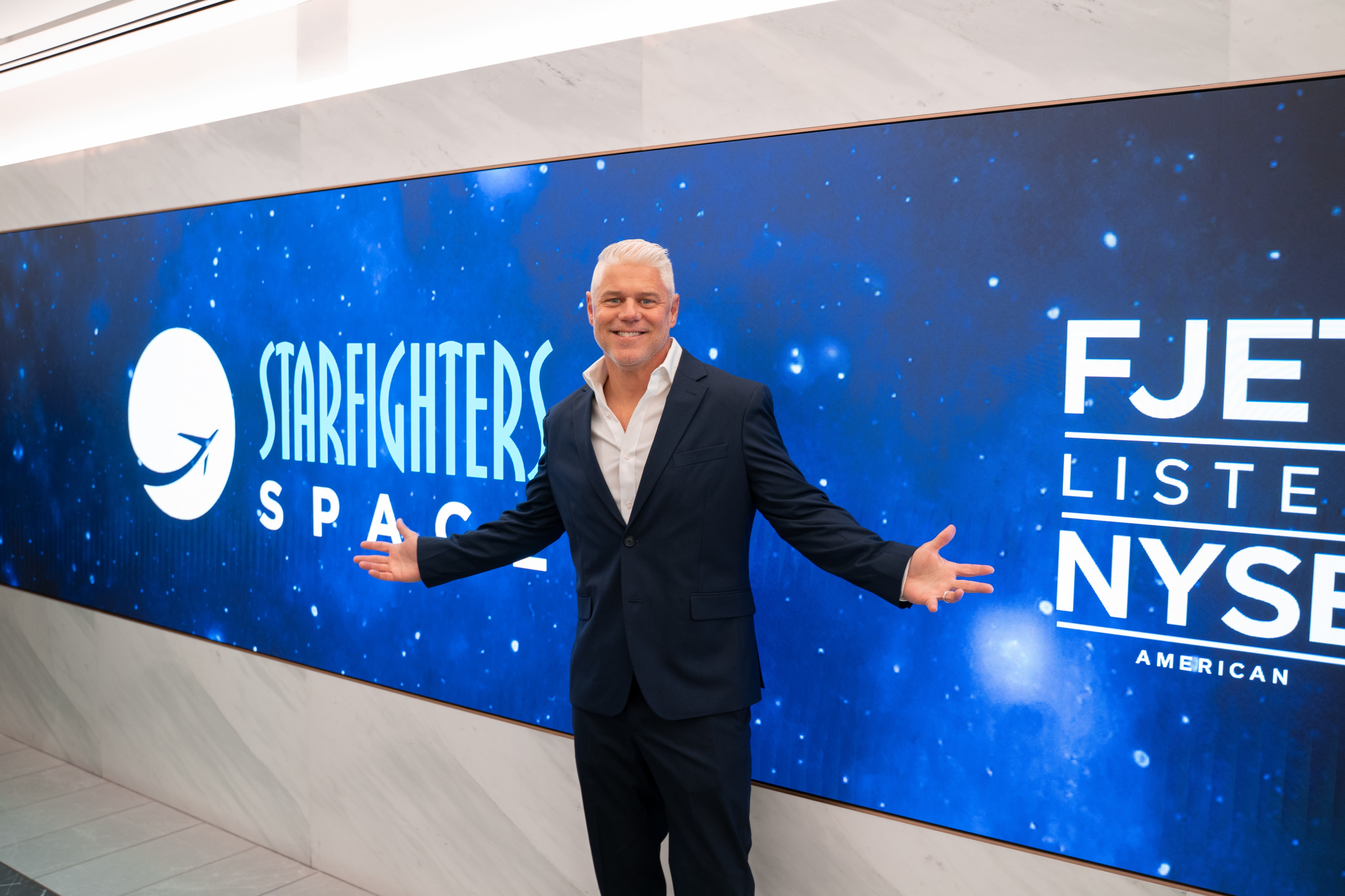
Today I’ve personally invested in over 35 startups with a combined valuation that now exceeds $1 billion. I’ve sat across the table from founders who built extraordinary companies, invested alongside Kevin O’Leary and Mark Cuban, been invited to ring both the NYSE bell and the Nasdaq, and helped thousands of everyday investors — people with no Wall Street connections, no Ivy League network, no family office behind them — get into deals once kept completely out of reach.
But here’s the most important thing I can tell you about who I am: I don’t share a deal I haven’t already put my own money into. Not once. Not ever. Not as a policy for appearances, but because the only way to give someone trustworthy guidance on a startup investment is to have skin in the game yourself — to have done the work, run the numbers, talked to the founders, and decided with your own capital that it’s worth betting on.
Every deal I’ve ever shared with my community, I was already in. That’s not something you’ll find in most corners of the financial advice world.
Now I’ll tell you something I don’t talk about publicly very often, because it has nothing to do with returns and everything to do with why I get out of bed and do this. I have kids, and when I look at the world they’re going to inherit, I feel a very specific kind of urgency.
AI is displacing entry-level jobs faster than anyone wants to admit
College is delivering less of what it promised and more of what it costs
Housing is unaffordable for an entire generation
The conventional financial path is showing cracks that won’t repair themselves
The people who are going to be okay in the world that’s coming are not the ones who played it safe. They’re the ones whose parents and grandparents made decisions today that set them up tomorrow — decisions that didn’t just change a portfolio balance, but changed the entire trajectory of a family.
Ten generations from now, I want someone in my family to look back at a decision Jenni and I made and say: “They changed everything for us. They gave us a shot we wouldn’t have had without them.”
That’s the legacy I want to leave for my family. And I want that for you too — not just returns on a spreadsheet, but a decision that outlives you, one your great-grandchildren feel the effects of long after you’re gone. The most direct, most respectful-of-your-time way I know how to help you get there is what I’m about to hand you right now.
— Josh T., Angel Investor
Chris Graebe’s work changed how I think about investing. It showed that building real wealth through startups isn’t just for insiders, but for anyone with the sense to get started. His book gave me the clarity and confidence to make my first angel investment.
[Full name available on file. Results not typical. This person was not compensated for their review.]
— Ash G., Innovation Expert
The Angel Advantage is a game-changer. Chris distills complex investment strategies into clear, actionable insights, unlocking a powerful mindset. His authenticity and wisdom make this a must-read, whether you’re new to angel investing or refining your skills.
[Full name available on file. Results not typical. This person was not compensated for their review.]
Here’s what most people reading this are going to do: they’re going to wait. They’ll read everything I’ve laid out and find a reason to hold off — to watch a little longer, until things feel more certain, until some external signal tells them the moment is right. And by the time that signal arrives, clearly and unmistakably, the window will already be closing.
The people who made life-changing returns on Amazon didn’t make them by buying the stock the day it went public in 1997. They made them by being in the deal before the public ever heard of it — and the difference between those two entry points isn’t a matter of degree, it’s a matter of kind. Google’s early angels saw returns of over 16,000% before it ever hit a public exchange. Facebook’s earliest private investors turned every dollar into roughly $2,000 by the time the IPO opened — while the people who bought on IPO day watched the price drop for over a year. And with SpaceX, the window for the kind of return that changes a family’s trajectory wasn’t the IPO that’s coming — it was the rounds that happened a decade ago.
Every single time, the life-changing money is made at the beginning — before the public markets, before the institutional money floods back, and before the price reflects what’s being built.
So let me ask you directly. The next SpaceX is out there right now — somewhere in America, a founder is building something that’s going to matter enormously, raising capital in an environment where the institutional money has pulled back and the deals that would normally never reach an everyday investor are sitting right on the table. The question isn’t whether that opportunity exists. I know it exists, because I’m looking at deals like it every single week.
The question is whether you’re going to be the person who gets in at the beginning — before the crowd, before the institutional money comes back, before the price reflects what’s being built — or the person who reads about it three years from now and wishes they’d paid attention when the window was open.
V
What I Want To Put In Your Hands
After nearly a decade inside this world — after the wins that validated the system and the losses that refined it, after sitting across from founders who built extraordinary things and founders who didn’t — I took everything I actually use, every filter, every signal, every question I ask before I write a single check, and compressed it into its essential core.
Eight pages. Not a 300-page book, not a 12-week course, not a theoretical framework built for an audience that has never written an angel check with their own money.
And here’s why that number should excite you. The biggest difference between investors who do well and ones who don’t isn’t knowledge — it’s the ability to act with clarity and conviction when a deal is in front of them. The enemy of that clarity isn’t too little information. It’s too much of it — an overwhelming pile of frameworks and competing signals that turns a ten-minute decision into a paralysis that lasts while the deal closes without you. What I built is the direct antidote to that paralysis.
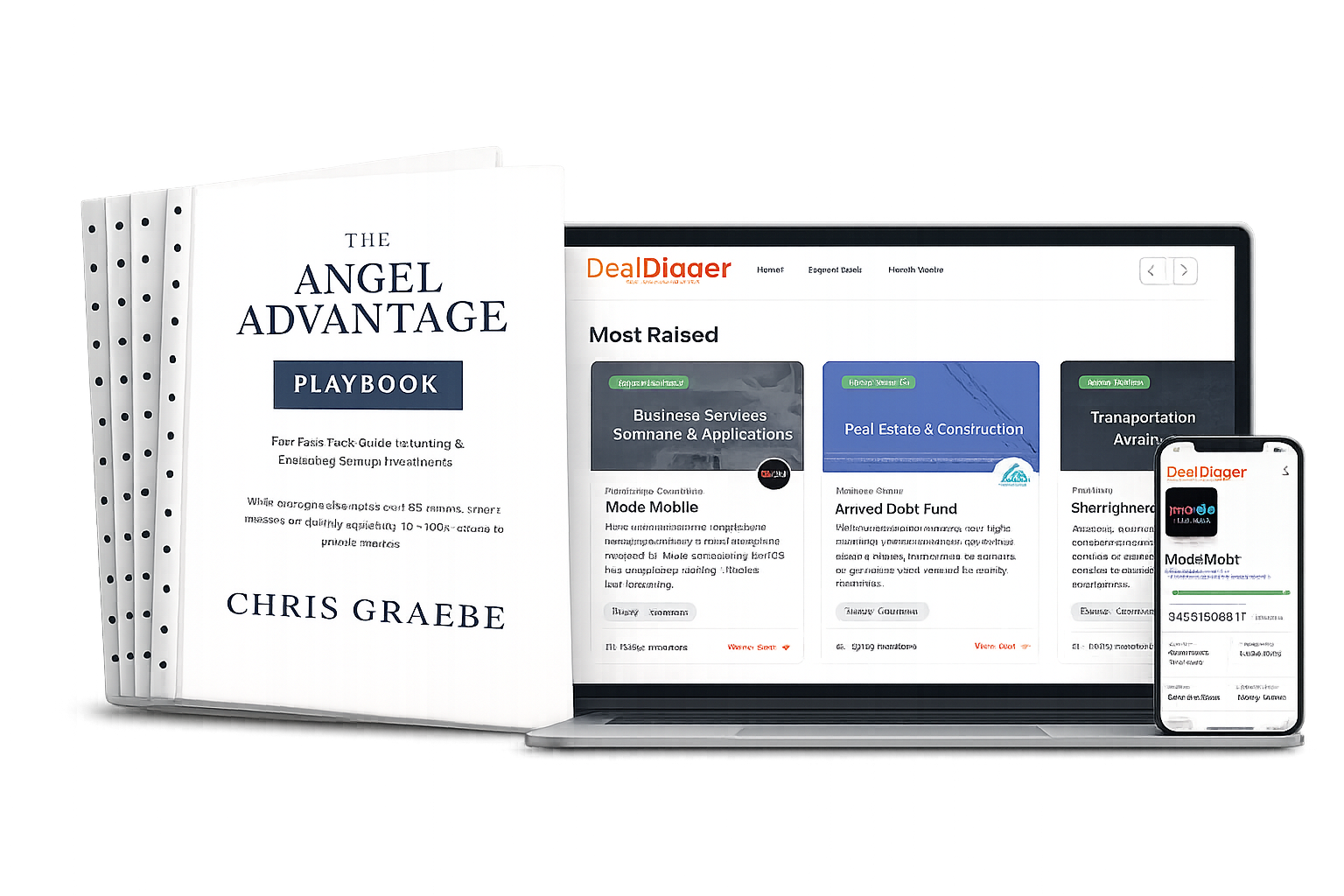
THE
ANGEL ADVANTAGE
PLAYBOOK
Your Fast-Track Guide to Finding & Evaluating Startup Investments
“While everyone else fights over 6% returns, smart investors are quietly capturing 10x–100x returns in private markets.”
CHRIS GRAEBE
This is what the Angel Advantage Playbook contains:
The precise signals I look for in a founding team — the ones that separate the founders who’ll figure it out from the ones who’ll drain your capital and almost make you quit. I’ve been burned getting this wrong, and I built this section so you don’t have to learn it the same way.
The single most important question I ask about a startup’s market that most angel investors never think to ask — the one that has saved me from more bad deals than any other part of my framework, and that will genuinely surprise you.
The four-step filter I use to evaluate any deal in under ten minutes, separating the ones worth a deeper look from the ones that will waste your time, energy, and eventually your money.
The “One Winner Pays For Everything” logic that makes angel investing mathematically powerful even when most bets don’t go your way — the single concept that changes how you think about risk in early-stage investing forever.
The red flags I look for in a founder that aren’t obvious from a pitch deck — the subtle signals that took me years and several painful experiences to learn to read, laid out as plainly as I know how.
None of this is theory, none of it is borrowed from a textbook, and none of it was built by someone who’s never had their own money in a deal that didn’t work out. Every piece came from being inside this world, making decisions with real capital, for nearly a decade, across more than 35 investments.
But here’s the thing: a system without deals to run it on is just words on a page. That’s why I’m including something else entirely — something that completes the loop between knowing how to evaluate a deal and actually having deals worth evaluating.
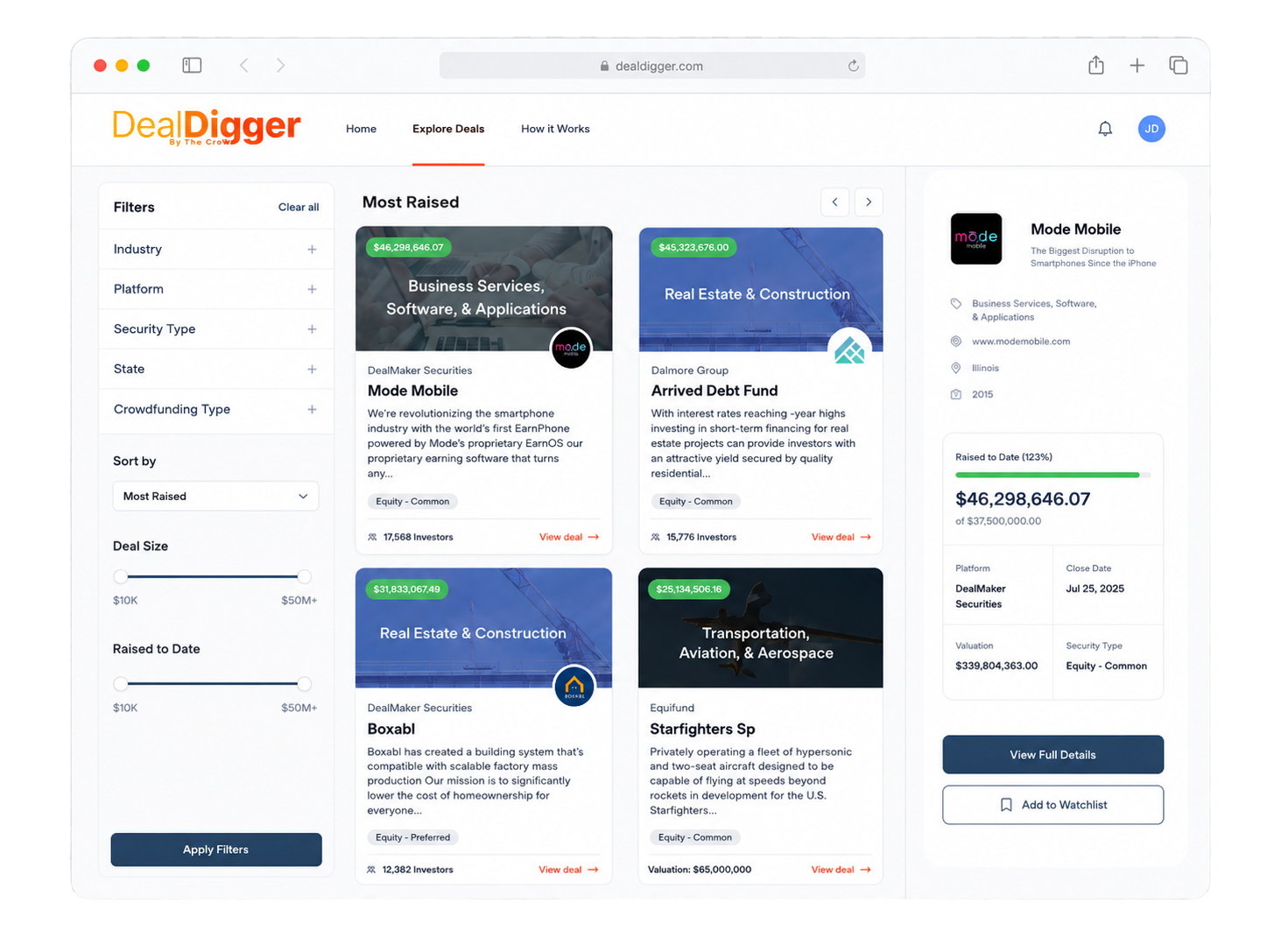
Deal Digger is the platform I personally use to find pre-IPO startup opportunities before they hit mainstream platforms — the tool that surfaces deals before the crowd arrives, before valuations reflect the attention that’s coming, and before the entry points that exist today get compressed by the wave of capital the SpaceX IPO has already begun sending into this space.
The playbook shows you how to evaluate a deal. Deal Digger puts the deals in front of you. Together, they form a complete system.
The Core System8 Pages · $9.95 Value
The Angel Advantage Playbook
The complete 8-page evaluation framework — every signal, every filter, every question I ask before I write a check, refined through nearly a decade and 35+ real investments.
$199 Value1 Year Full Access
Deal Digger
The deal-finding platform that surfaces pre-IPO startup opportunities before they go mainstream — so you’re not just ready to evaluate what you find, you’re actively hunting for it before everyone else.
So why is a decade’s worth of real-world experience plus a deal-finding platform priced at $29?
A fair question. I have three honest answers.
Reason no. 01
No Velvet Rope
The financial establishment spent generations building a wall between ordinary people and the asset class that creates more generational wealth than almost anything else. That wall was made of access, complexity, and price. I’m not going to rebuild it myself, and I’m not going to let price be the reason someone who genuinely wants to learn this can’t get in.
Reason no. 02
For Action Takers
At $29, this won’t attract the person who wants something for nothing, who downloads free resources and never opens them. This system only works for someone who intends to use it — and the small act of investing $29 is the first honest signal that they’re the kind of person who takes action when the window is open rather than waiting until it’s closed.
Reason no. 03
Clarity In Uncertainty
One of the most crippling things in uncertain times is the feeling of helplessness — watching things happen without any framework for understanding them or any tools to act. What this gives you, at the deepest level, is the calm, grounded clarity to act when the moment comes rather than freezing because everything feels too uncertain.
— Billy B., Entrepreneur
Chris’s message is consistent whether you’re watching his videos, reading his work, or hearing him in person: stop spectating, stop overthinking, and get in the game. Now.
[Full name available on file. Results not typical. This person was not compensated for their review.]
— Allen B., Angel Investor
Chris stands out in the chaotic world of angel investing. His integrity, sharp insights, and ability to cut through the noise have been invaluable to me.
[Full name available on file. Results not typical. This person was not compensated for their review.]
— Randy B., Investor
This provides clear action steps and resources to help maximize investments, even for those without experience or a strong network. A quick, insightful read.
[Full name available on file. Results not typical. This person was not compensated for their review.]
VI
Two Clocks Are Running Right Now
The window I’ve been describing has a timeline. It’s real, it’s measurable, and it’s running on two clocks simultaneously.
Clock One
The SpaceX IPO
SpaceX just went public, and it’s already making pre-IPO investing front-page news — sending hundreds of thousands of investors scrambling to understand early-stage deals. That wave of attention and capital is compressing valuations, increasing competition, and making today’s entry points look extraordinary by comparison. The investors who benefit most are the ones who built the knowledge and made their first moves before that wave hit.
Clock Two
The Founders
A generation of founders is actively choosing everyday investors over institutions right now — bringing better deals to people like us than anything available in years, at terms that reflect a market where institutional competition is at a decade low. That window doesn’t stay open once the IPO wave changes how the world thinks about this space.
Both clocks are running whether you’re paying attention or not. The founders raising right now won’t wait for you to feel ready. And now that the SpaceX IPO has landed and every financial publication is explaining what pre-IPO investing is, the quiet advantage of already knowing — already having the framework, already having the platform running, already having made your first moves — is disappearing into the noise fast.
Let me leave you with something I’ve been thinking about since I started writing this. Every story of generational wealth I’ve ever encountered has the same quiet detail buried near the beginning: a moment where one person, before anyone around them understood what they were looking at, made a decision that felt uncertain, that didn’t come with guarantees, that required them to act before the crowd arrived and the window closed.
Not a perfect decision. Not a decision made with complete information. Just a decision, made at the right time, by someone who had done enough work to recognize what they were looking at and enough conviction to act on it. That’s how legacies start.
So the decision in front of you isn’t really about whether to spend twenty-nine dollars. It’s about whether you’re going to be the person in your family who paid attention when the window was open — who had the framework ready when the deals arrived, who had the platform finding those deals before the crowd did — or the person who saw it coming, waited, and spent the years after it closed explaining all the sensible reasons the timing wasn’t quite right.
You have two choices right now.
Choice 01
Close This Page
Go back to what you were doing, watch what happens to SpaceX investors over the next 90 days, and wait until the crowd arrives, the valuations compress, and the entry points that exist today are gone. Maybe the window closes without you and nothing catastrophic happens — but you’ll know it closed, and you’ll know you were here when it was open.
Choice 02 · Recommended
Get The Great Unlock Starter Kit
For $29, get the exact playbook I use every time I evaluate a deal, plus a full year of Deal Digger to find those deals before they go mainstream. Spend the next few weeks running a real framework on real opportunities — and be the investor who is already positioned, already practiced, already ready when The Great Unlock puts the best startup deals of the decade in front of you.
Instant digital access. The Angel Advantage Playbook + Deal Digger 1-Year Access — in your hands in the next sixty seconds.
By purchasing, you agree to receive educational emails from Chris Graebe. You can unsubscribe at any time.
60-Day Satisfaction Guarantee
If you’re unhappy at any point in the next 60 days, contact our support team and they’ll issue you a credit toward any of our other services.
P.S. The SpaceX IPO just changed how the world thinks about pre-IPO investing overnight. The investors who benefit most won’t be the ones who bought SpaceX on day one — they’ll be the ones who were already inside the ecosystem, already running the system, already finding deals before they go mainstream, already positioned before the wave of attention and capital hit. The playbook and Deal Digger together give you everything you need to be one of them. Don’t wait until after it’s front-page news.
Results mentioned are not typical. Angel investing involves substantial risk including total loss of investment. Past performance does not guarantee future results. The return figures cited reflect exceptional early-stage outcomes in specific companies and are not representative of what a typical angel investor should expect. This material is for educational purposes only and does not constitute financial advice. Chris Graebe is not a registered investment advisor. Nothing in this material should be construed as personalized investment advice.
DISCLAIMER: This site is not a part of the Facebook™ website or Facebook Inc. Additionally, this site is NOT endorsed by Facebook™ in any way. Facebook™ is a trademark of Facebook, Inc.
The Angel Advantage is an educational resource designed to help investors understand the opportunities and strategies involved in early-stage private investing. Please note: Investing in startups and private companies carries inherent risks, and past performance is not indicative of future results.
IPODealHunter makes no guarantees about your ability to earn returns, find successful deals, or achieve financial outcomes using the ideas, strategies, or tools provided. This content is for educational and informational purposes only and should not be considered investment, legal, financial, or tax advice.
Any earnings examples or results shared are for illustration purposes only and are not promises of what you can or will achieve. Always do your own due diligence and consult licensed financial or legal professionals before making investment decisions.
By using this site and accessing our materials, you accept full responsibility for your actions, decisions, and outcomes, and agree not to hold us liable in any way.